How is Lit Factory different from Herdr?
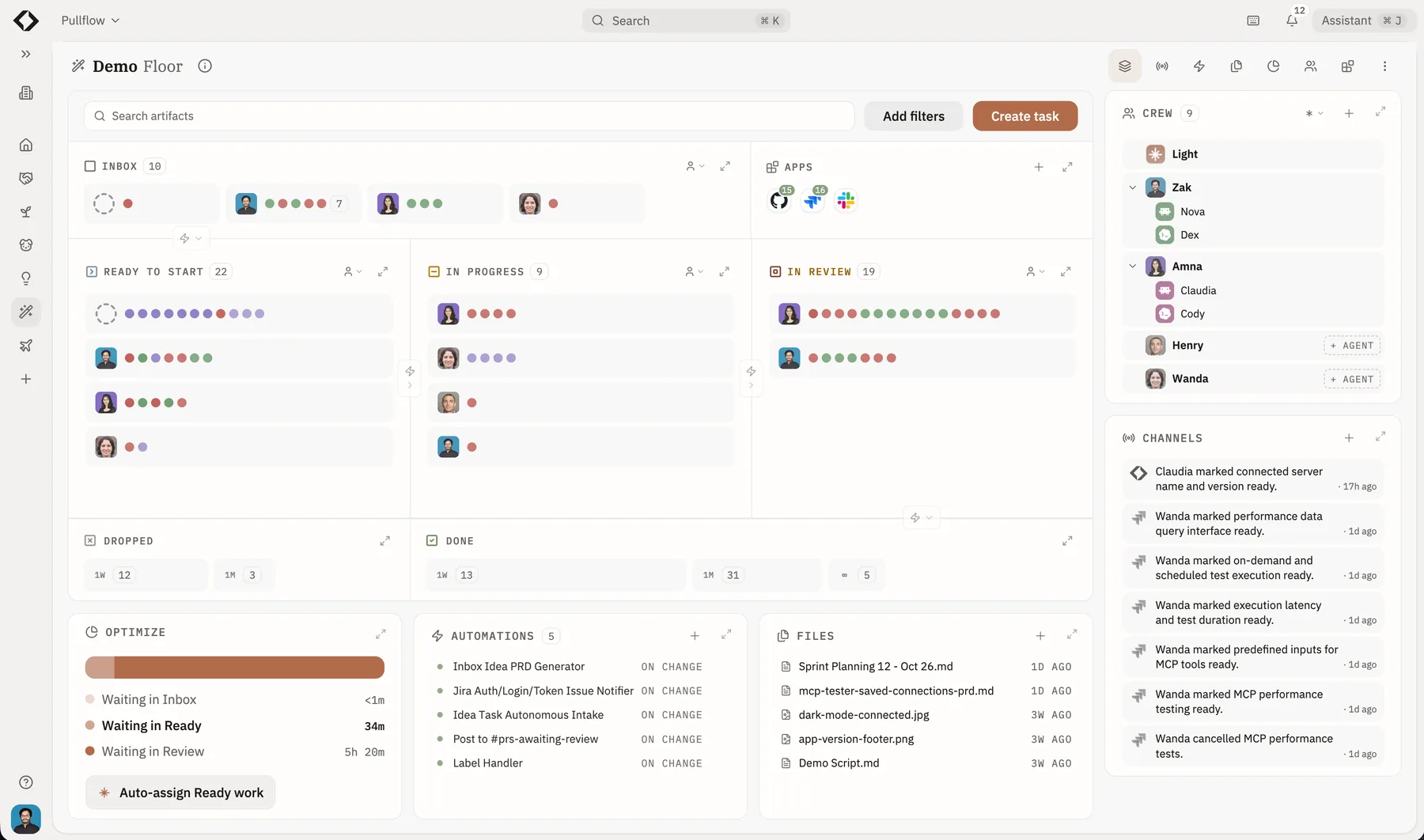
Herdr provides a coding-agent runtime and developer workspace. Lit Factory coordinates shared work across people, agents, and apps. Both support agent oversight and coordination. Lit Factory adds the team workflow around execution: ownership, shared decisions, review, context, and operational improvement.
Can someone else answer my agent's question?
Yes. A shared Floor request can be answered by an authorized Floor collaborator, including someone who did not initiate the agent session. The answer stays connected to the work. Private requests remain separate, and a Floor decision does not override the coding agent's own tool permissions.
Can we keep Claude Code, Codex, or another coding agent?
Keep the supported coding-agent environment your developers have optimized, including their skills and team instructions. Lit Factory connects its work to the wider team. Herdr also supports multiple terminal-based agents; agent choice alone is not the distinction.
Can Herdr and Lit Factory work together?
A developer workspace and a shared team workflow can serve complementary purposes. For your setup, verify how the coding agent connects to Lit Factory, which context reaches the Floor, and how answers return to the session. Bring that workflow to a demo; a Herdr-specific integration is not assumed.
When should we choose each product?
Choose Herdr when your priority is running and supervising coding-agent terminals in a workspace you can customize. Evaluate Lit Factory when progress also depends on other people's decisions, reviews, and work across apps. In the demo, follow one shared request from the agent to a teammate and back into execution.